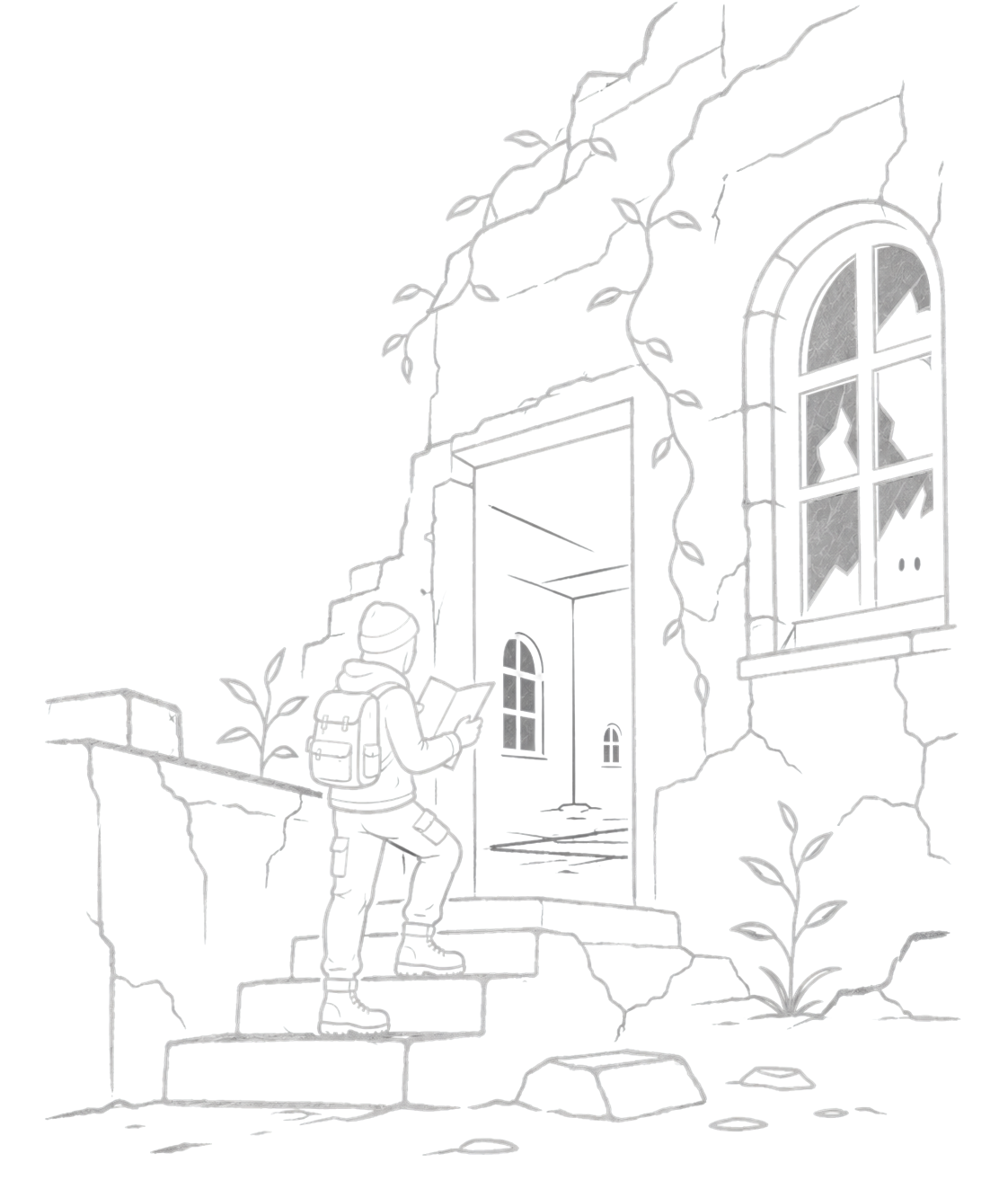
How do you find abandoned places near you?
Start with a community urbex map, then cross-check a potential location against local records, recent reports and information about the owner. A map helps you discover a place; it does not establish permission to enter or confirm its present condition.
The useful question is not simply whether a building looks empty. It is whether you understand what it is, how current your information is and what kind of visit is actually permitted.
Start with an urbex map and a realistic search area
Die Urbexplorer map brings community-submitted abandoned places together in one place. Begin with an area you can reasonably reach, then look for the kinds of sites that interest you: former factories, residential buildings or other remnants of an area’s past.
Use the map category guide to understand what the symbols mean. Read a location’s description rather than choosing it only from its marker or a dramatic photograph. A short travel distance is not a reason to skip research.
Urbexplorer’s map access is available after one suitable new location submission is approved, with an optional donation route as an alternative. Approval is about contributing useful information; it is not permission to visit the places shown.
Use local history to identify promising leads
Local newspaper archives, heritage registers, historical maps and library collections can explain where industries, institutions or settlements once stood. Search for former uses and historical names as well as today’s place names. A building may appear under several names across different decades.
For example, an old newspaper report about a mill closing can suggest a research lead. This is an illustrative example, not evidence that a particular mill still exists or is accessible. Verify the present site before drawing conclusions.
Satellite imagery and street-level photographs can add context, but note when they were captured. An image of an empty-looking property may predate renovation, demolition or a change in ownership.
Separate discovery from current status
Once you have a lead, make a small research note instead of immediately planning a visit.
- Record the source and date of each description or photograph.
- Check whether recent reports refer to the same building rather than a neighbouring site.
- Look for redevelopment announcements, demolition notices and updated business uses.
- Identify the owner or responsible organisation through appropriate official sources.
- Find out whether a permitted tour, open day or exterior visit offers a suitable way to experience the location.
No single clue proves abandonment. Closed curtains, vegetation or damaged windows can occur at properties that are still occupied, maintained or awaiting work.
Plan a visit, and then don't share private information with just anyone
Contact the owner or site operator where access requires permission. Conditions vary by site and jurisdiction, so a location appearing on a map should never be treated as an invitation to enter. If you cannot establish a suitable permission basis, choose another location or a viewpoint you are allowed to use.
If you share your location with others, make sure you can trust that person. On Urbexplorer, our moderators ensure that private information is visible only to members. Coordinates, entrances, and directions that are not part of public captions should not be made publicly available to everyone. Check photographs for address signs and other identifying details before uploading them.
Turn your useful research into a community contribution
If you discover a location that is not already listed, use the location submission page to contribute clear, accurate information. Include a specific name, a useful description and coordinates that match the actual site in the appropriate submission fields. Distinguish what you know from what you still need to verify.
If a place is already on the map, a relevant update is more helpful than submitting it again. New information about demolition or a changed use can prevent other people from relying on an outdated description.
Frequently asked questions
Can I use Google Maps to find abandoned buildings?
Imagery can help identify research leads, but it cannot reliably confirm abandonment, permission or current conditions. Compare its capture date with recent records and other sources.
Does an urbex map mean a place is safe to enter?
No. A listing is location information, not a structural inspection or permission statement. Research current conditions and permitted access separately.
What should I do after finding a possible location?
Verify its identity, date your sources and check permission before organising a visit. The next useful step is checking whether a place is still abandoned.


 Traum-Seite